Chapel of the Holy Sepulchre, Calvary
On the left, above the church
On the left, above the church
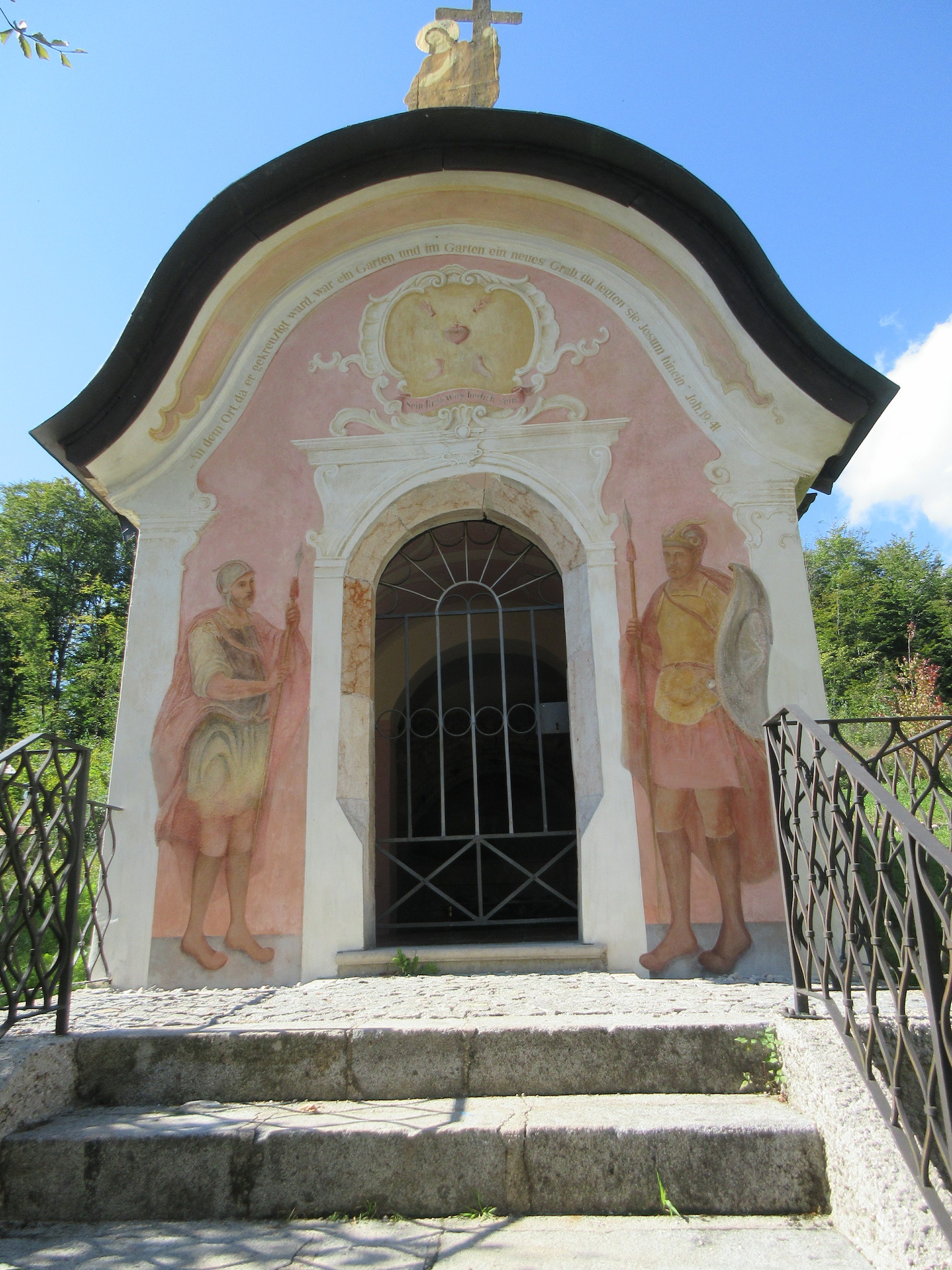
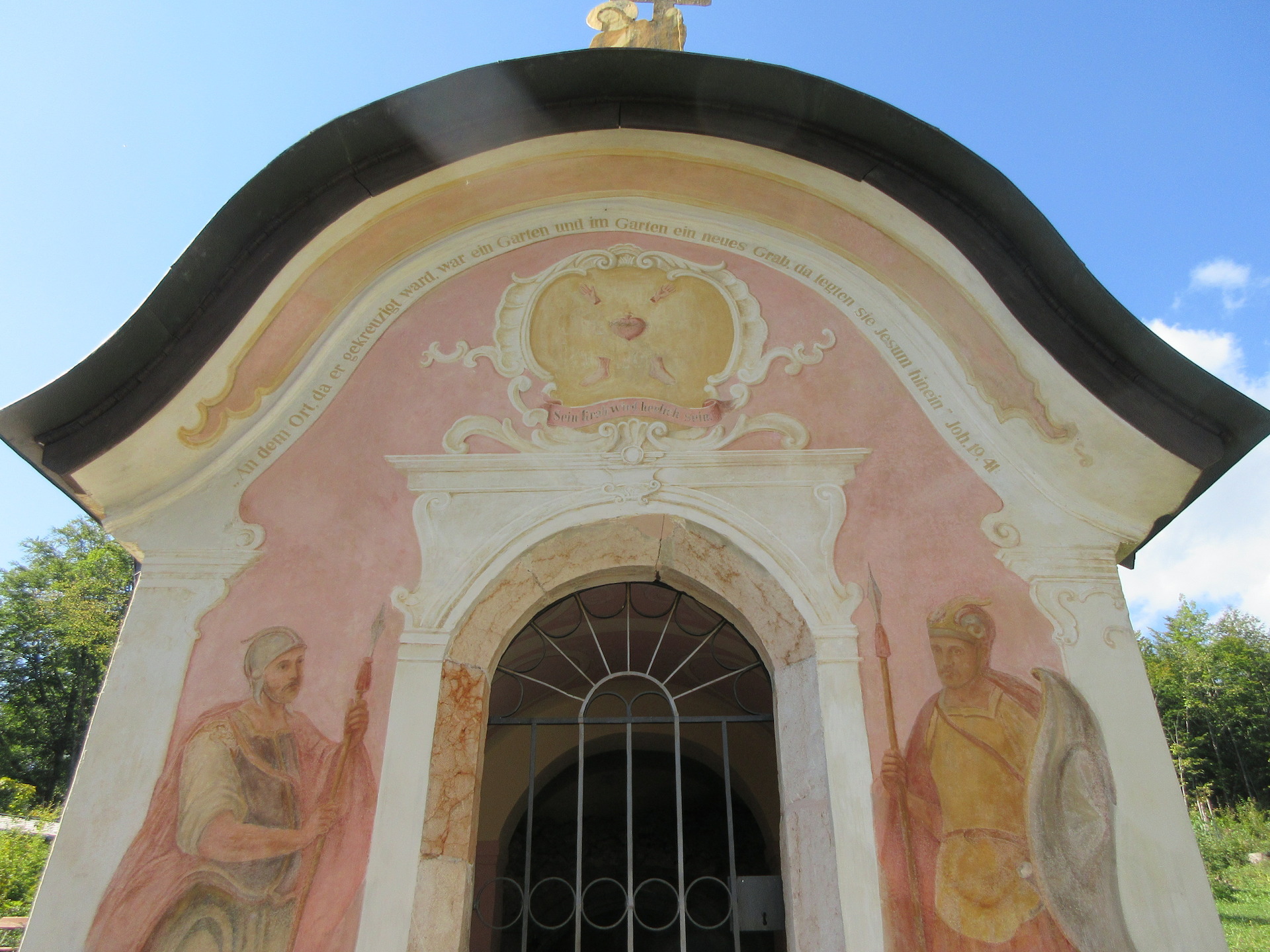
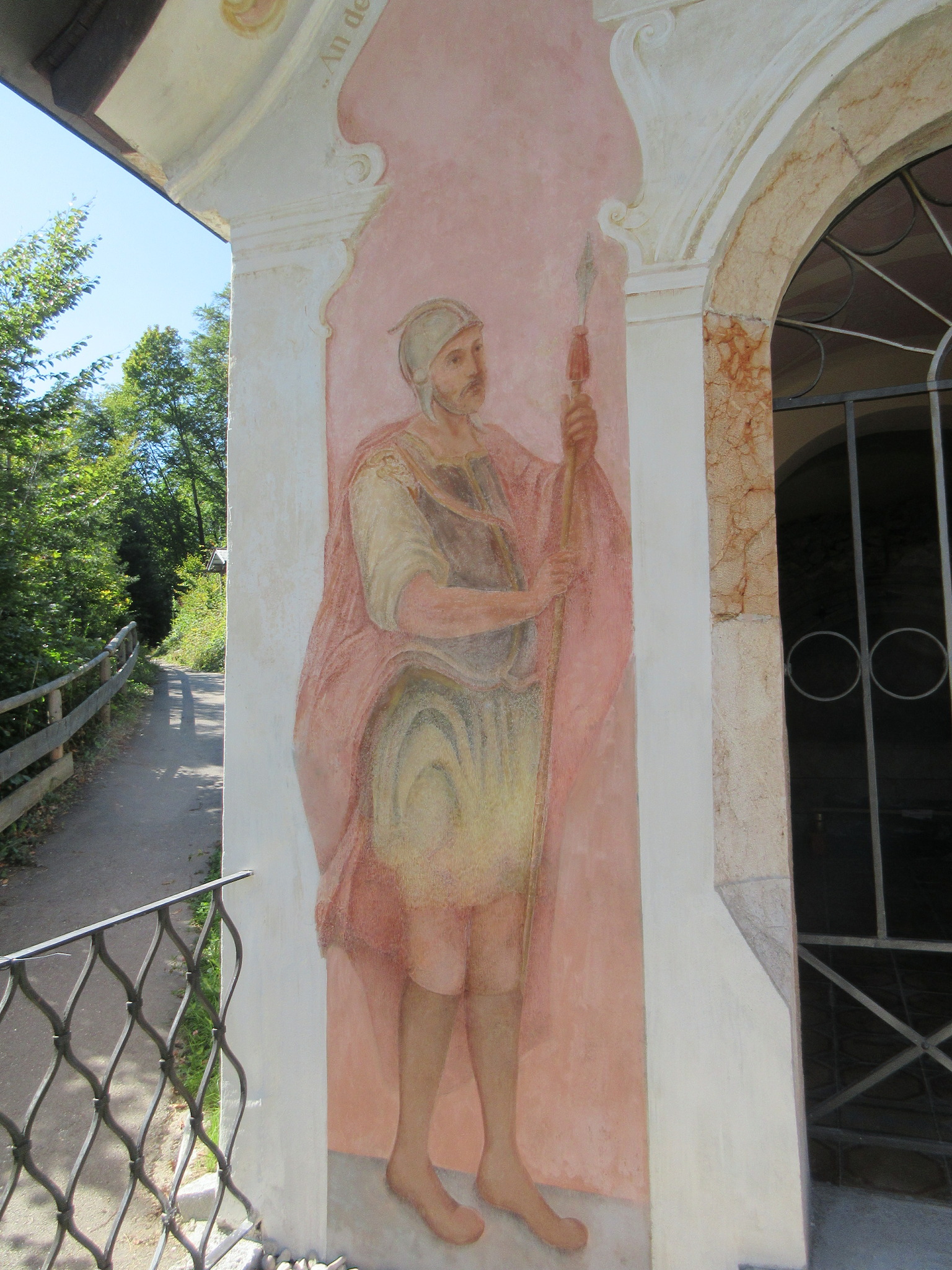
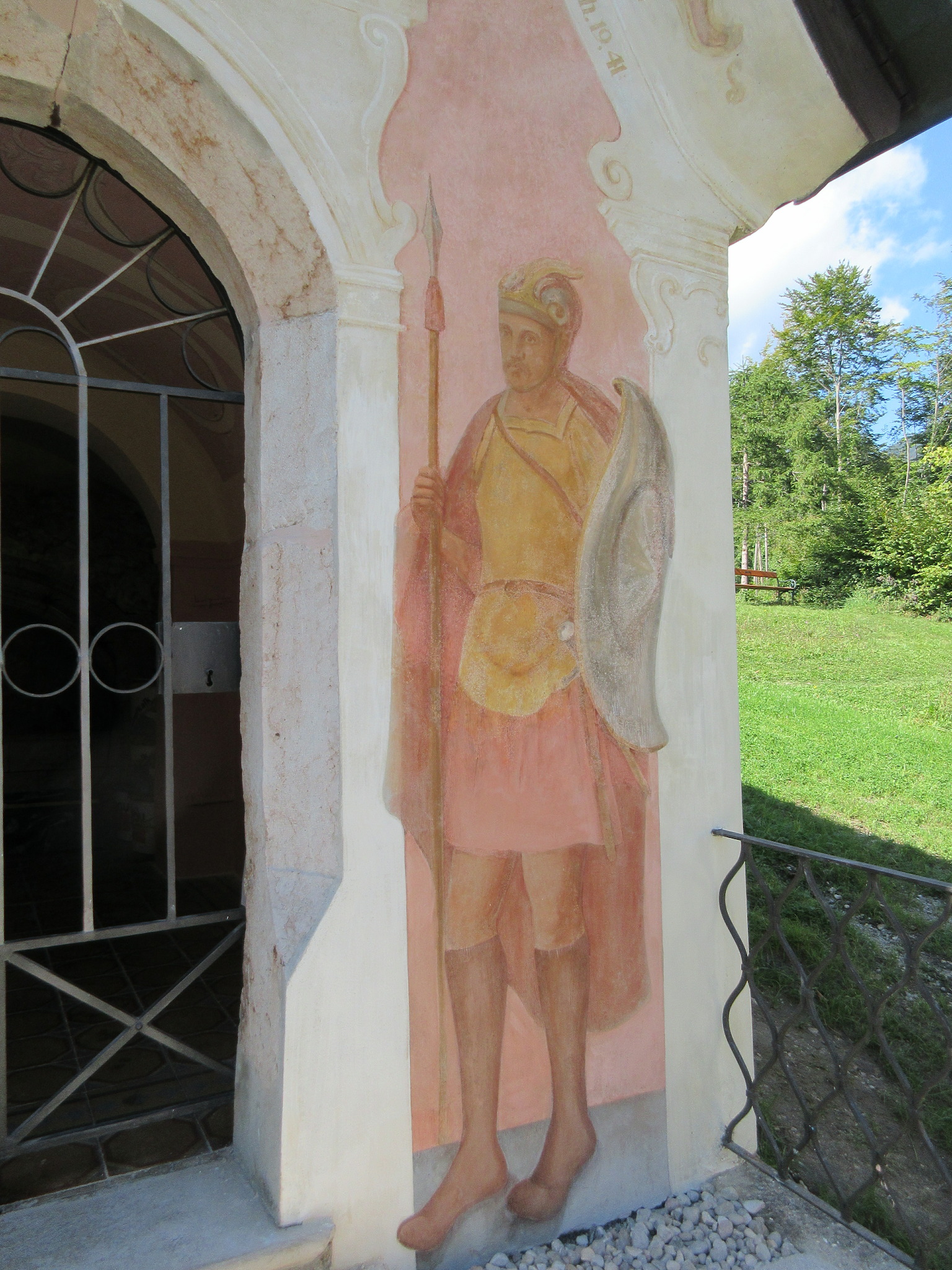
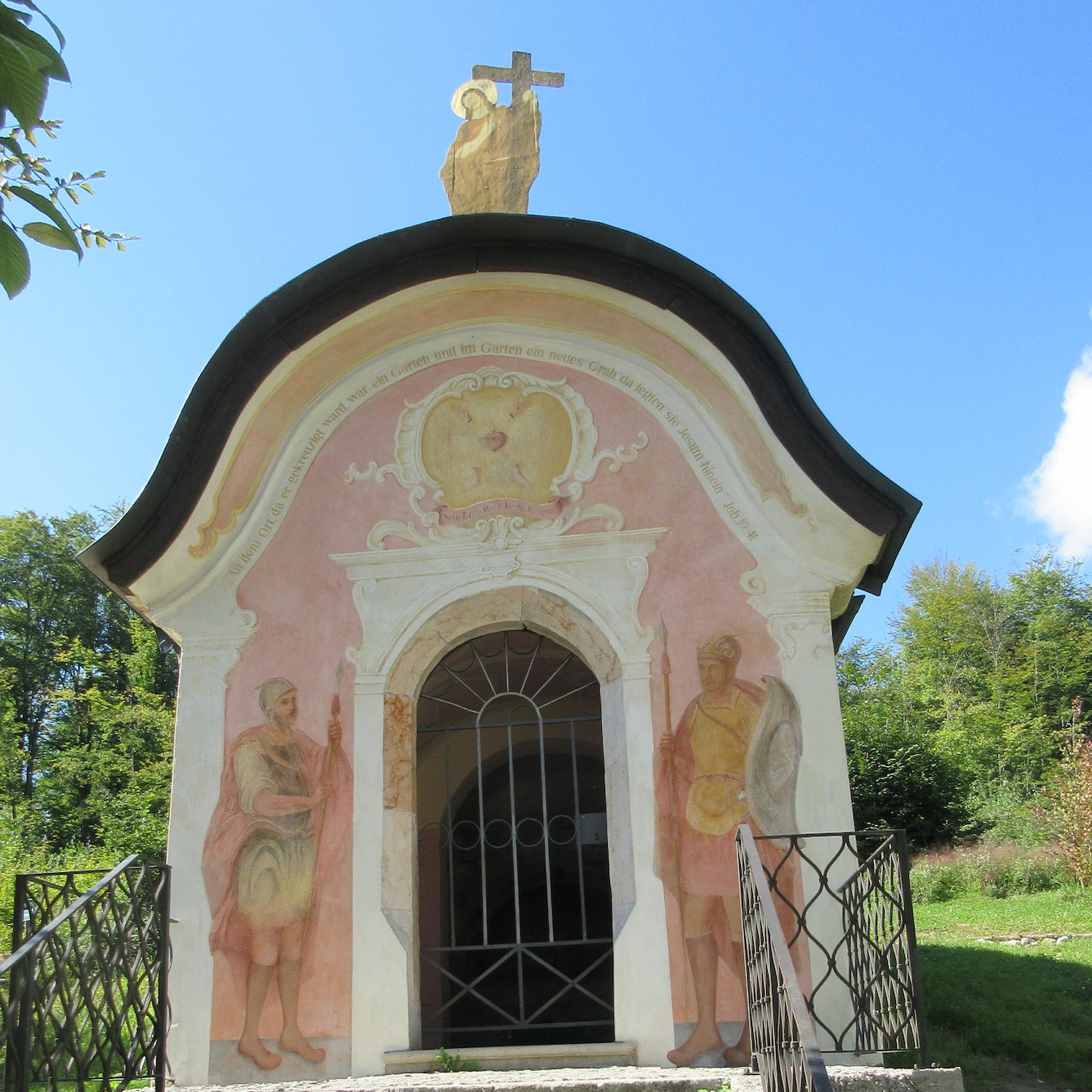
Around 1765, the Calvary ensemble was completed by adding the Chapel of the Holy Sepulchre. In accordance with the artistic movement of the time, the building was decorated with frescoes inside and out. In addition to two life-sized guards, there were scenes from the resurrection story in painted "stucco" frames, and a Mary with Seven Swords on the apse. Above the apse was a domed turret with twisted columns.
During the "restoration" of 1984-85, with the exception of the front, the old plaster with the frescoes, which have now partially become visible again, was removed. The remaining paintings were restored with little ambition.
The chapel is an elongated building, closed round at the back with a raised round gable, crowned by a tin figure of the Risen Christ. The special feature of the chapel is the illusionistic fresco decoration, which simulates both an architectural structure and human figures. Unfortunately, as mentioned, it is only preserved on the front. The entrance of the chapel is flanked by two tomb guards in Roman amour. At the chapel’s corners are painted pilasters and in the pediment is a painted cartouche with symbols of suffering and biblical quotations.
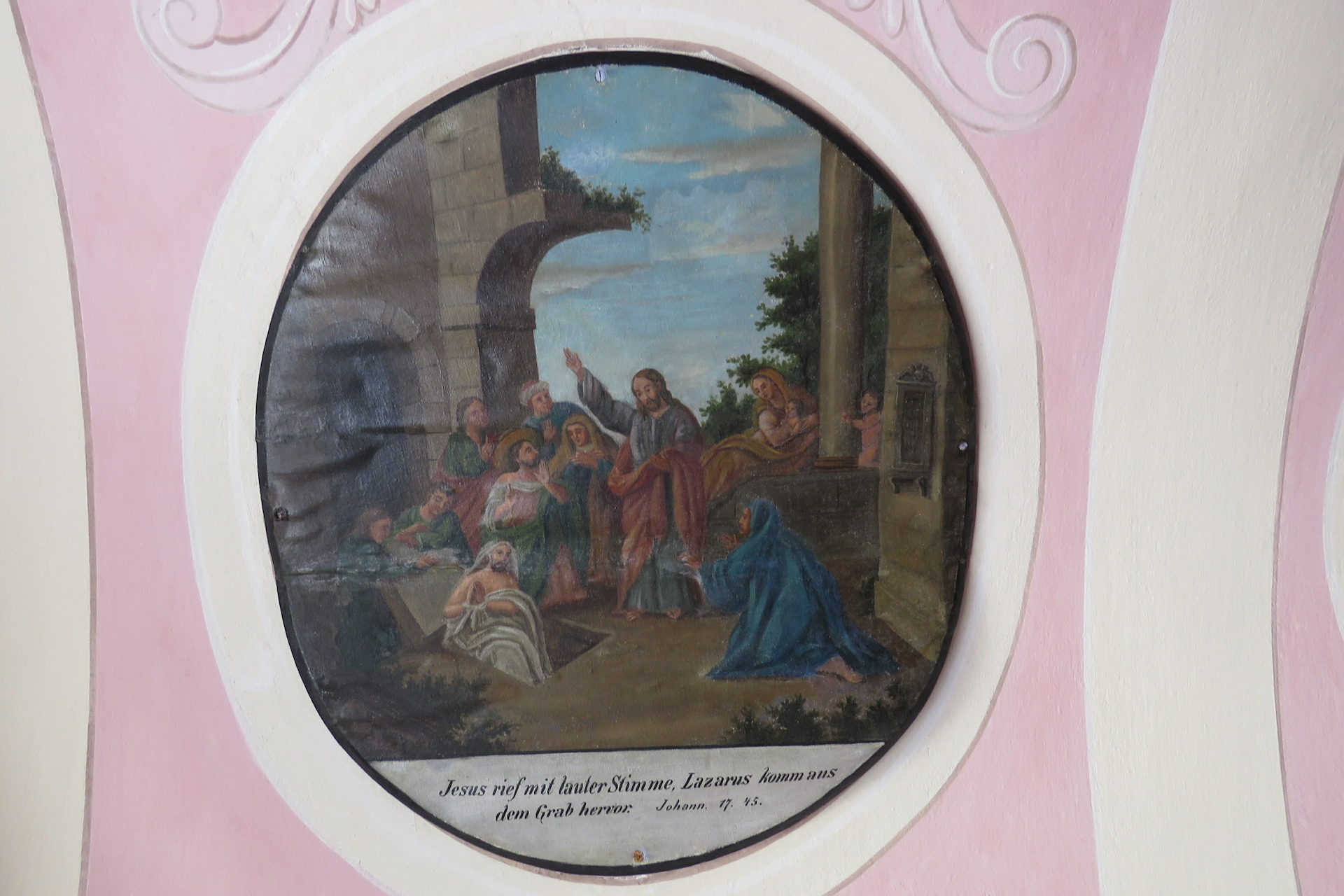
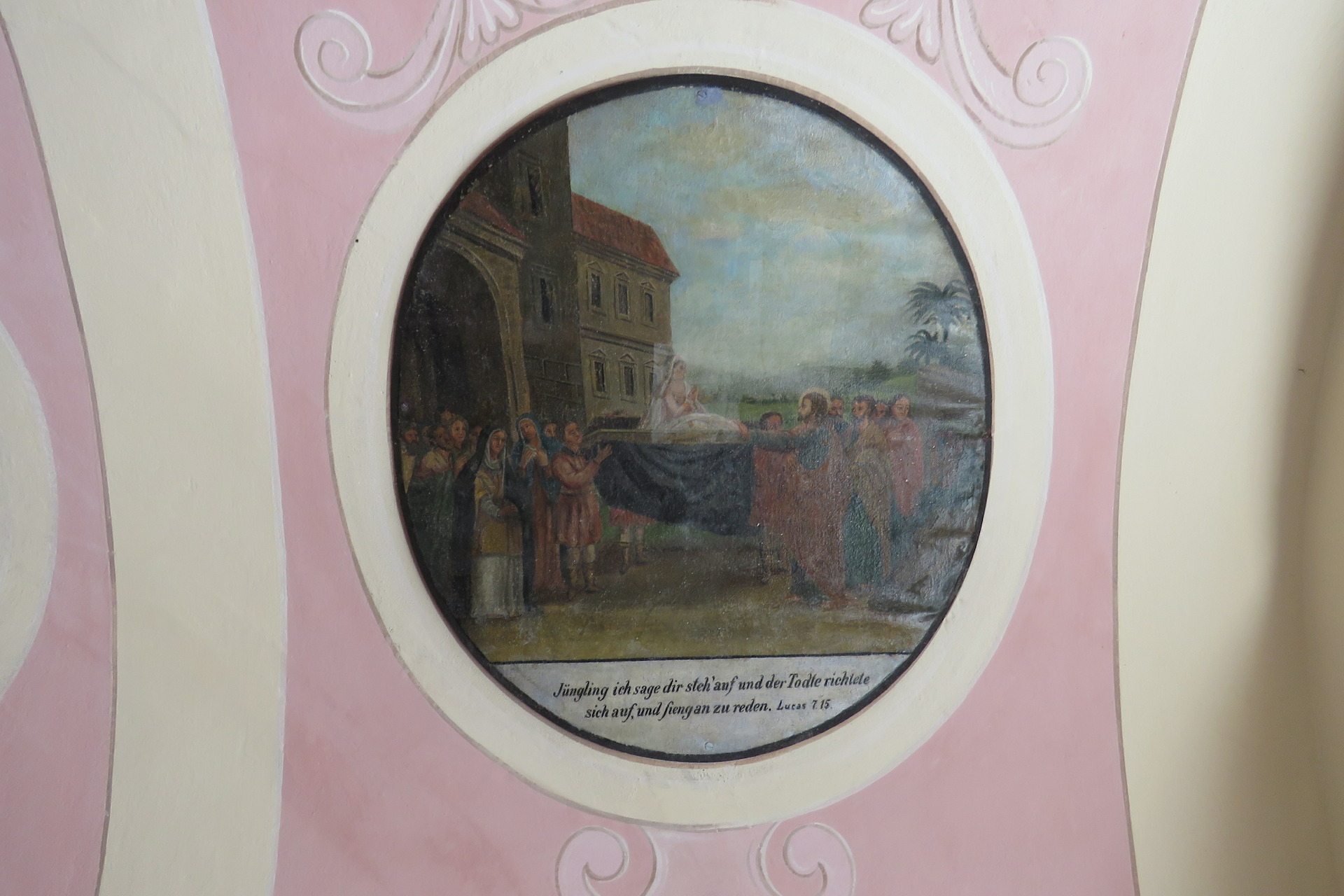
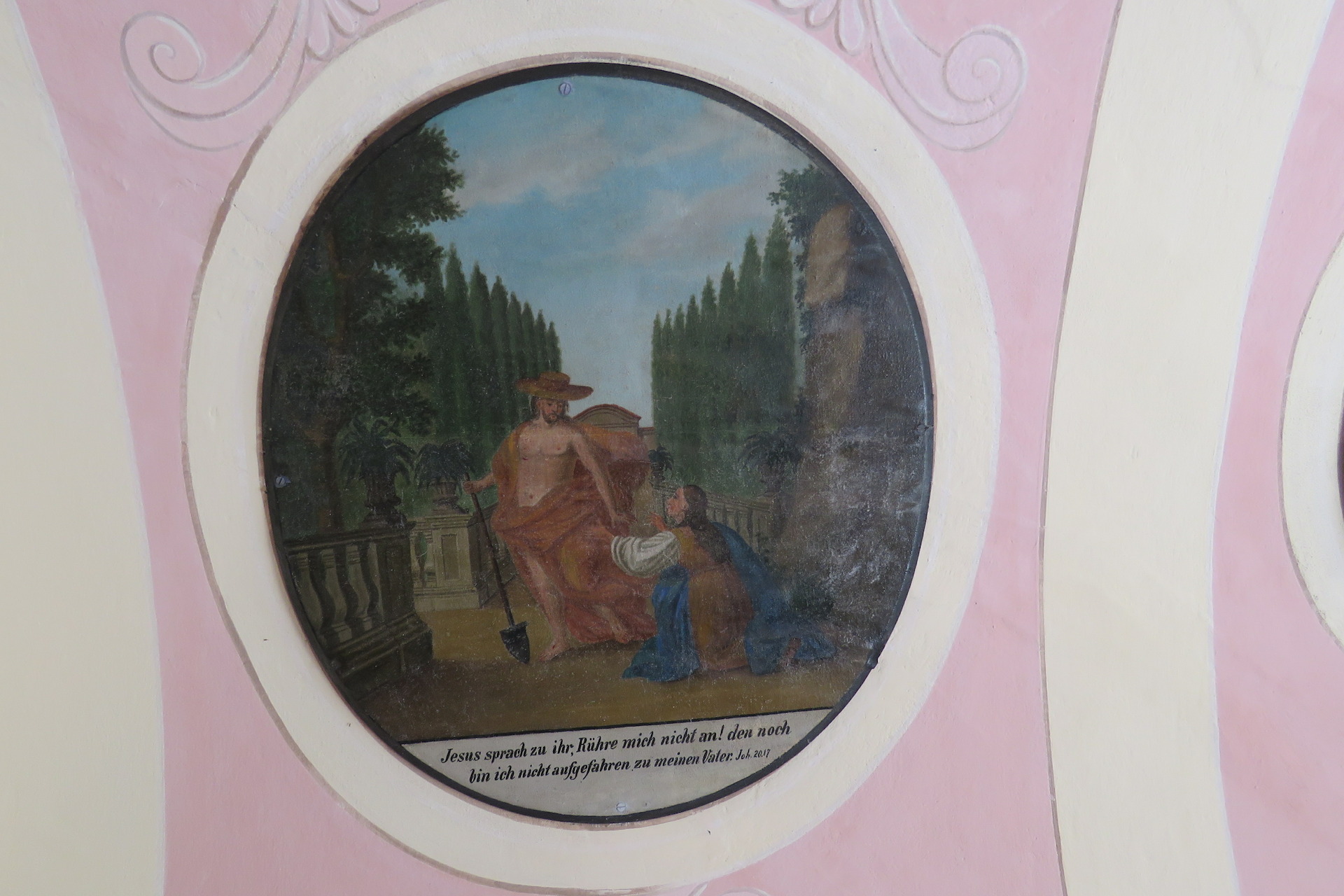
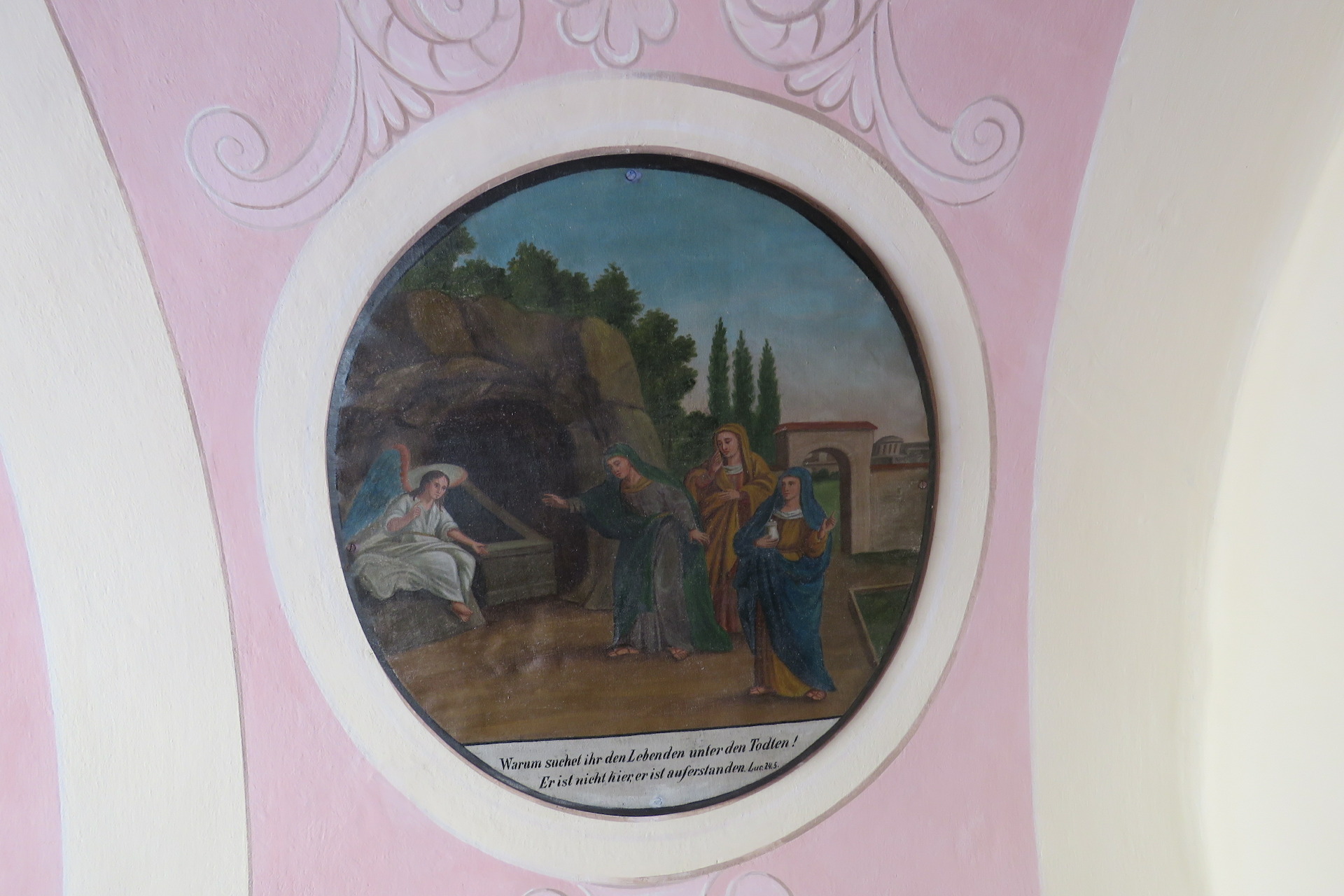
The entrance is made of a reused stone wall in late Gothic style with a Biedermeier wrought iron grille. Inside, there is a vestibule lit by three slits of light with four oval paintings (1899) by Karl Wutschl referring to the Resurrection and an older offertory box.
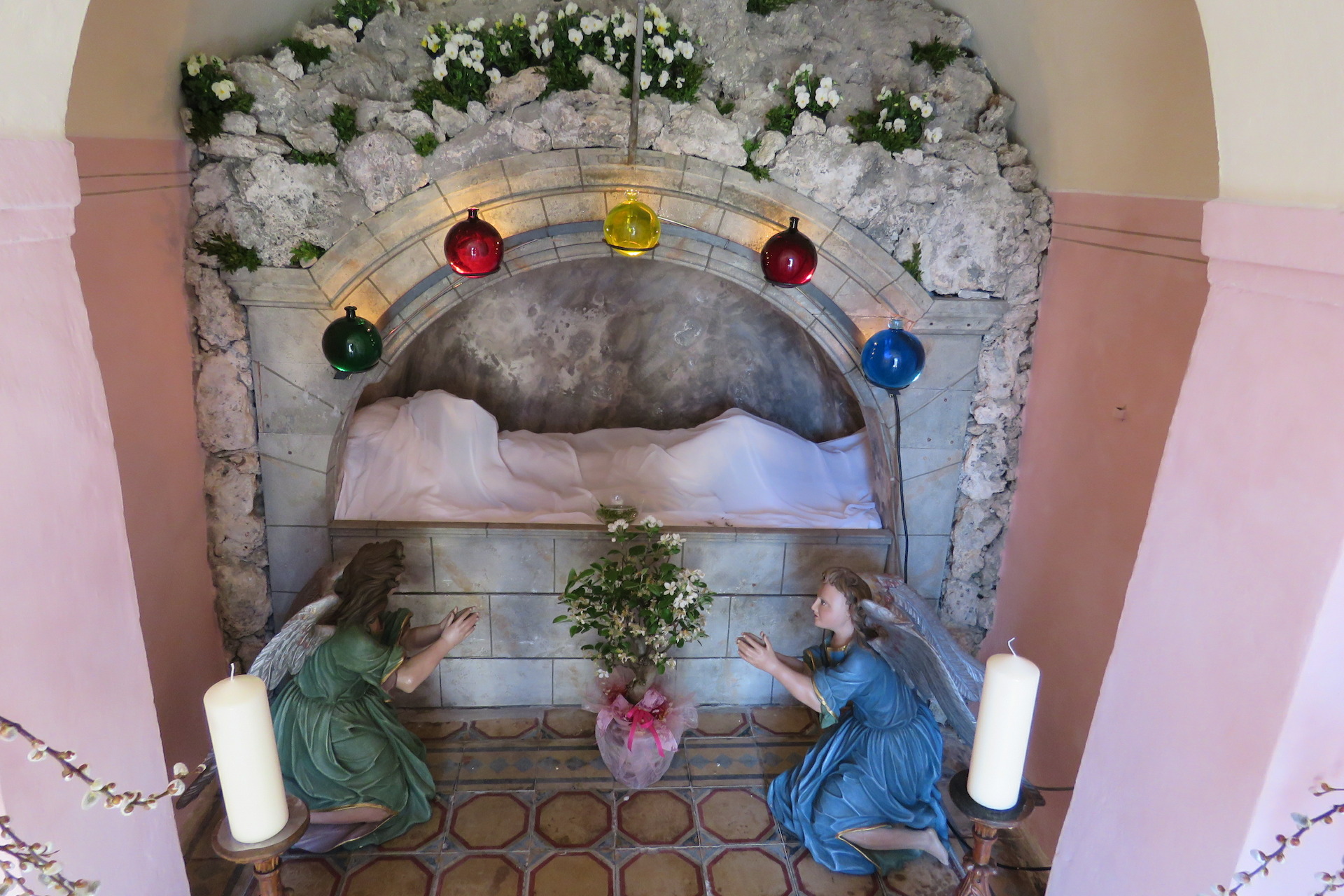
Behind the vestibule, behind a second Biedermeier grille, is the actual Holy Sepulchre from around 1899, which is a scenery-like structure made of painted wood and boulders. Throughout the year, the tomb is empty. On Good Friday and Holy Saturday, a life-sized wooden figure of the dead Christ lies in the tomb. At Easter, there is a wooden silhouette of the figure of the Risen Christ above the tomb, flanked by two kneeling angels.
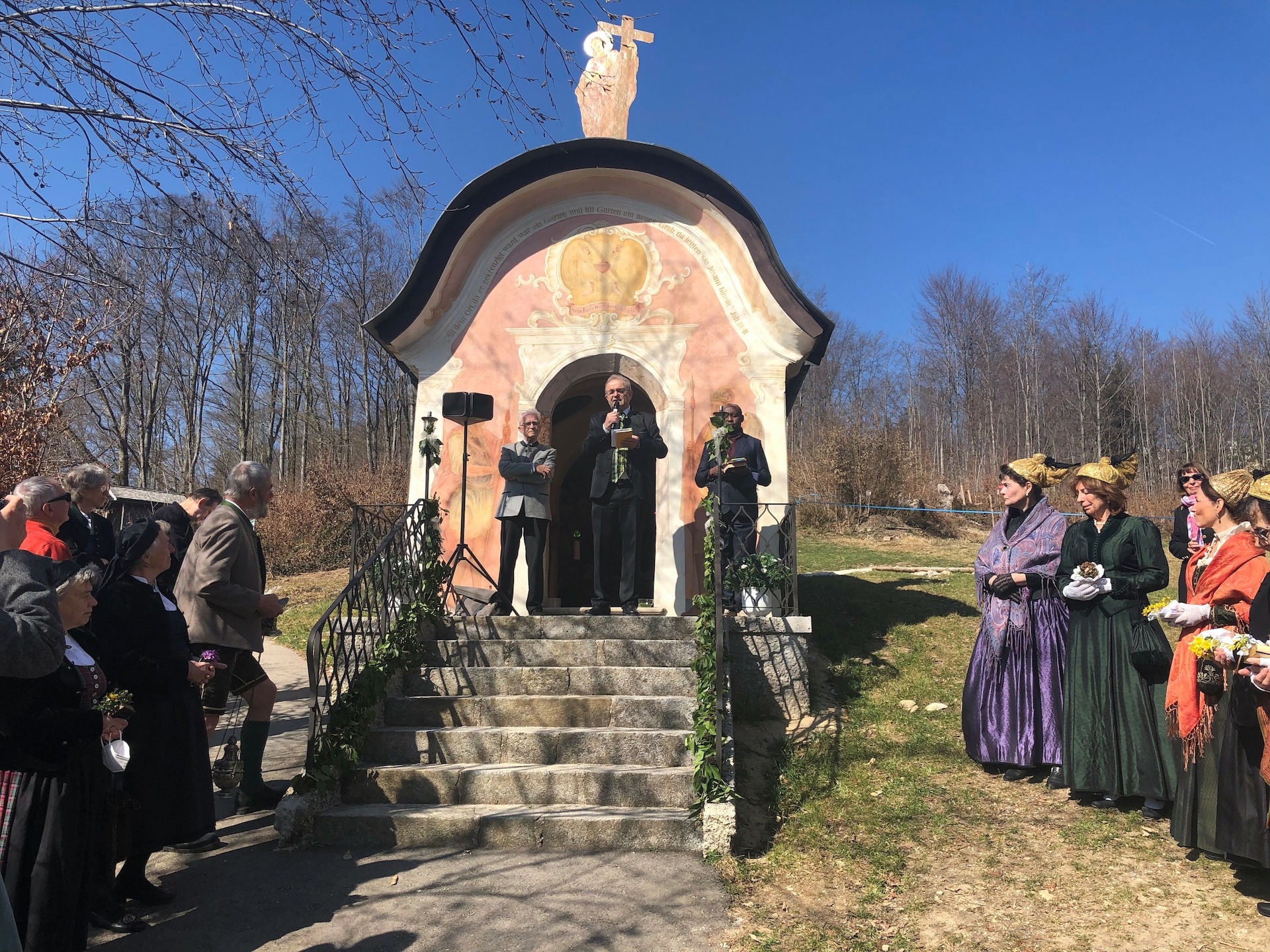
In 2021, the chapel was restored by the Cultural Heritage Society of Bad Ischl (Ischler Heimatverein). The works included drainage, restoration of frescos, vestibule and burial chamber, Holy Sepulchre, medallions, the Risen Christ on the roof. The consecration took place on 27 March 2022.