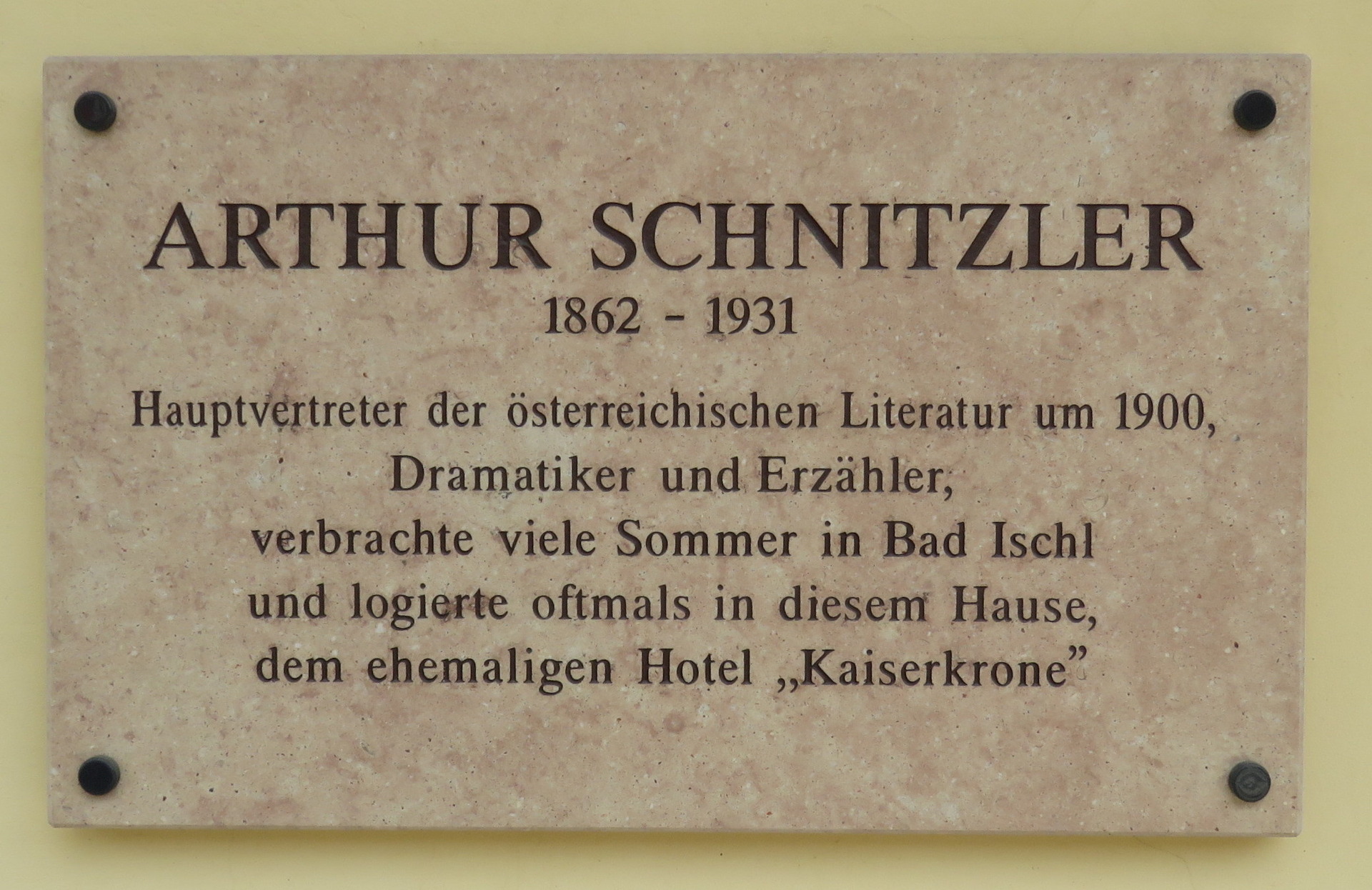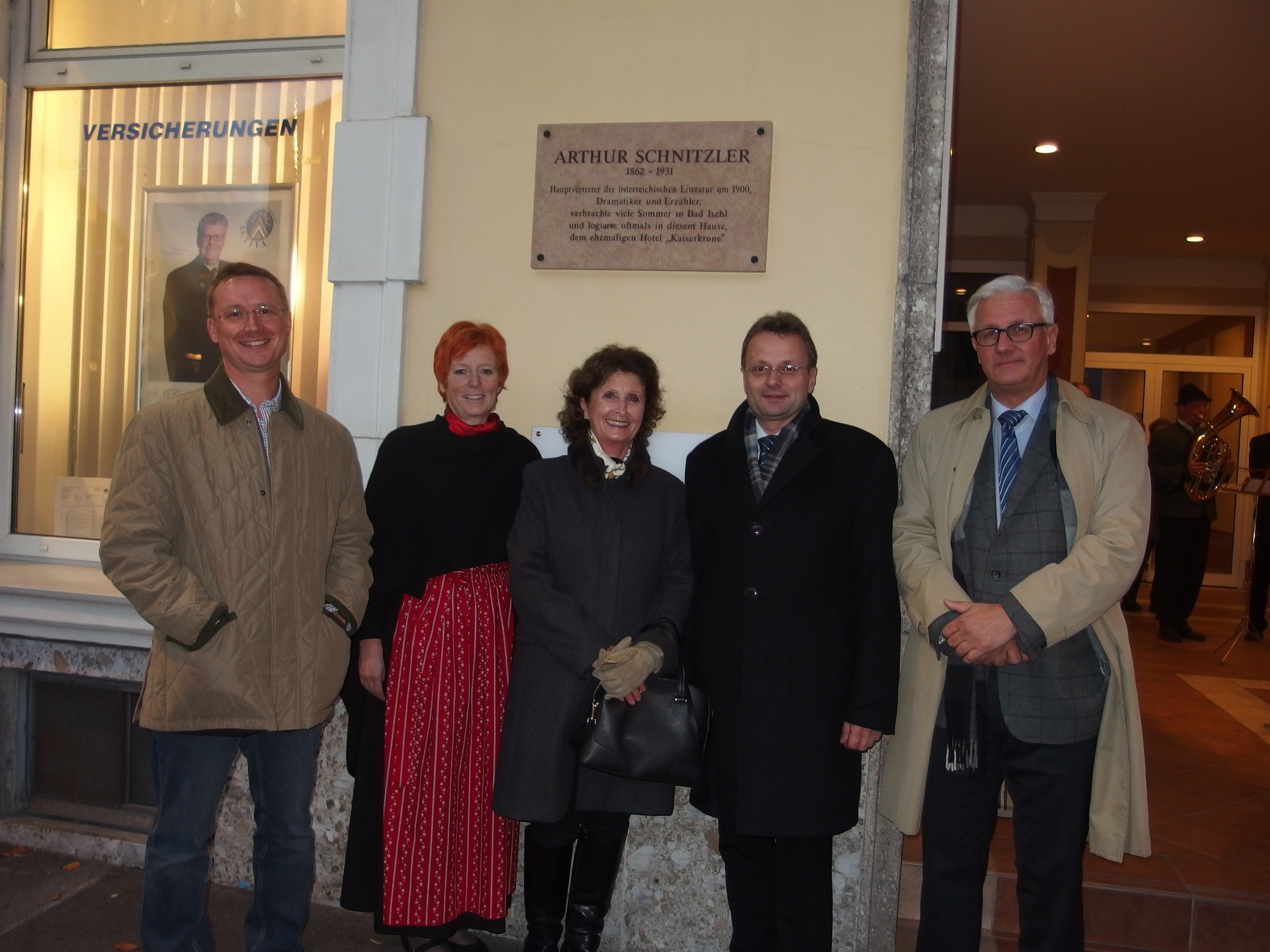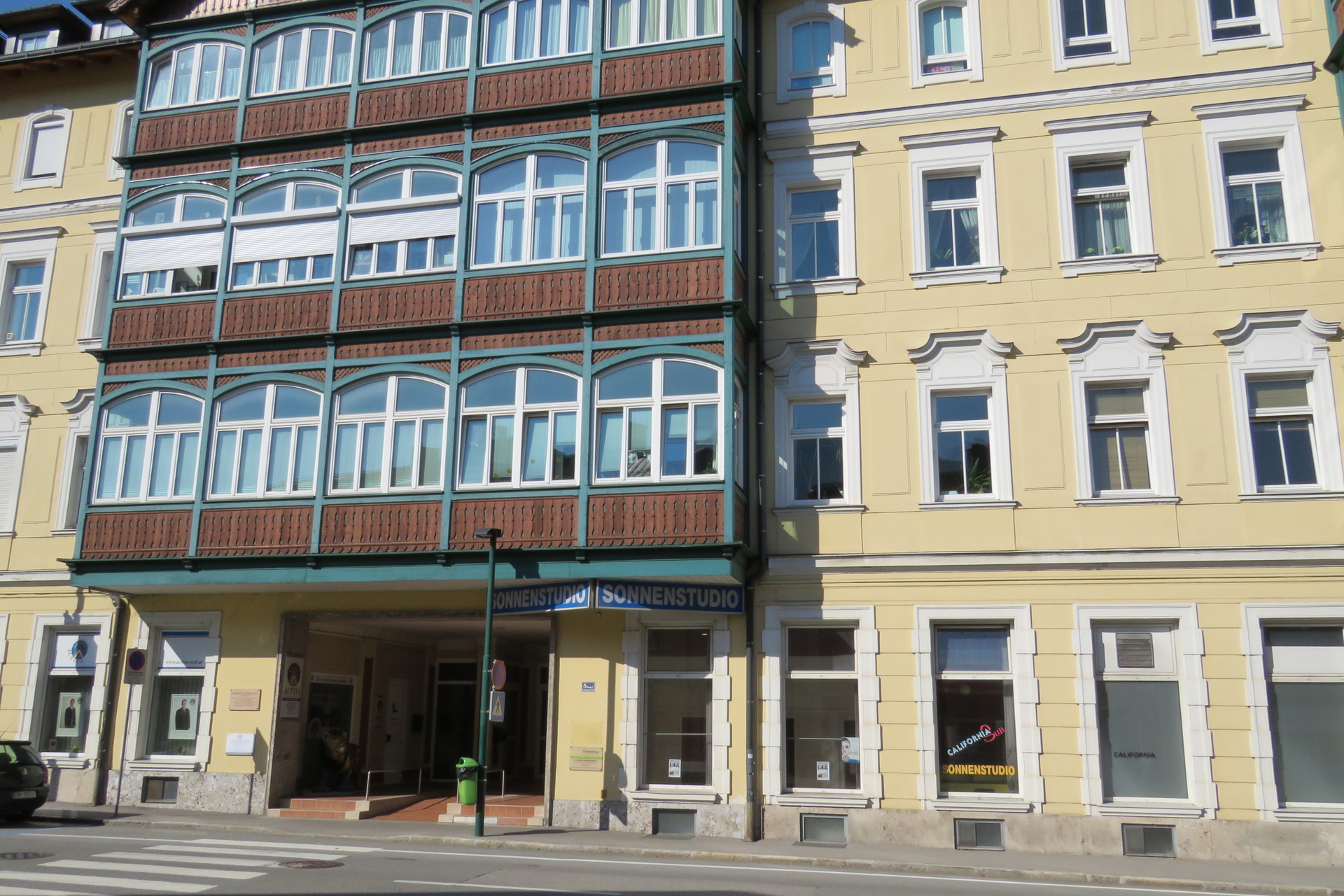
Arthur Schnitzler Commemmorative Plaque
Salzburger Straße 8
Salzburger Straße 8
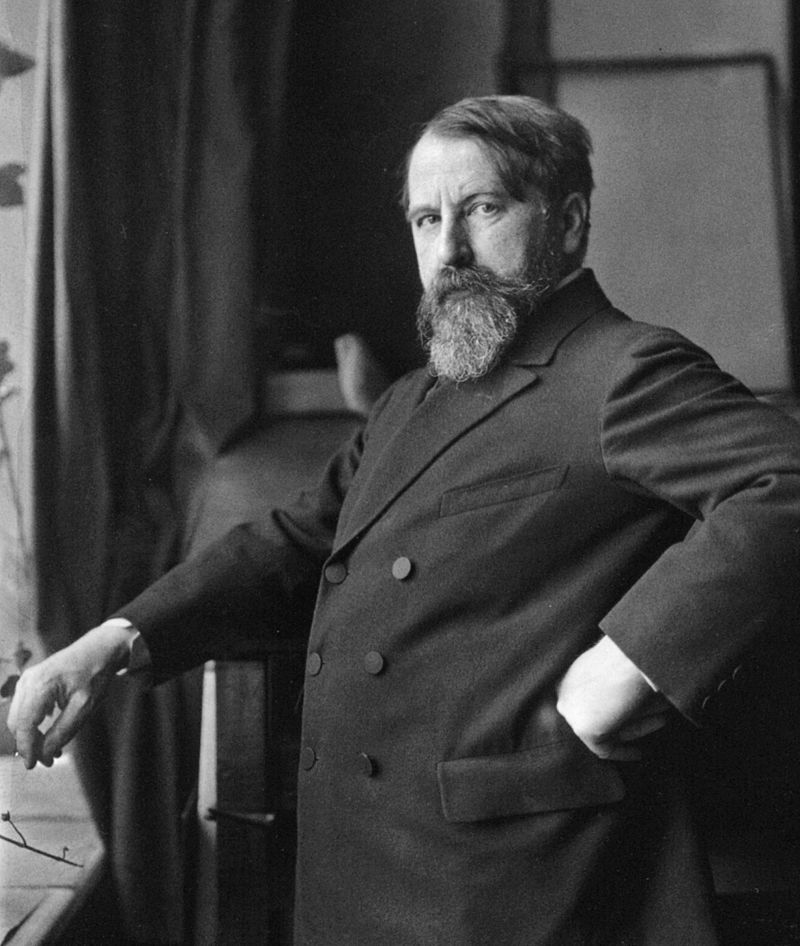
Schnitzler was the son of a bourgeois Jewish family. Originally, he was a doctor like his father, but soon devoted himself to literary work. His works show the tensions between social classes that are in a strictly organized culture, the problem of gender relations, and the important role of the military, which is hard to understand today.
As a playwright, he implemented numerous innovations (including the introduction of the “inner monologue”) and Schnitzler quickly became as famous as he was infamous. His first theatrical success was his play Anatol (1893), which was followed by Playing with Love (Liebelei, 1895), Free Game (Freiwild, 1896), La Ronde (Der Reigen, written in 1897, premiered 1920), Professor Bernhardi ( 1912 ) and others. Many of his works continue to be performed on stages all over the world and have been adapted for film (e.g., The Road to the Opan and Dream Story, which is the basis for Stanley Kubrick's Eyes Wide Shut).
Reference to Ischl
In his autobiography Youth in Vienna (Jugend in Wien), Schnitzler recalls: “In 1970 or 71, I breathed the Salzkammergut air for the first time.” The summer visits with his parents awakened Schnitzler’s lifelong enthusiasm for the area. From 1890 onwards, he "biked" the Salzkammergut region on a “bicycle”.
Some of his works were even premiered in the Salzkammergut: The Farewell Supper (Abschiedssoupé) a part of Anatol (1893 in Ischl); Free Game (Freiwild, 1897 in Gmunden); and Playing with Love ( Liebelei , 1898 in Ischl).
His love for the Salzkammergut area did not stop during the years of war, so he and his family remained loyal to the area in 1914, 1915 and 1916.