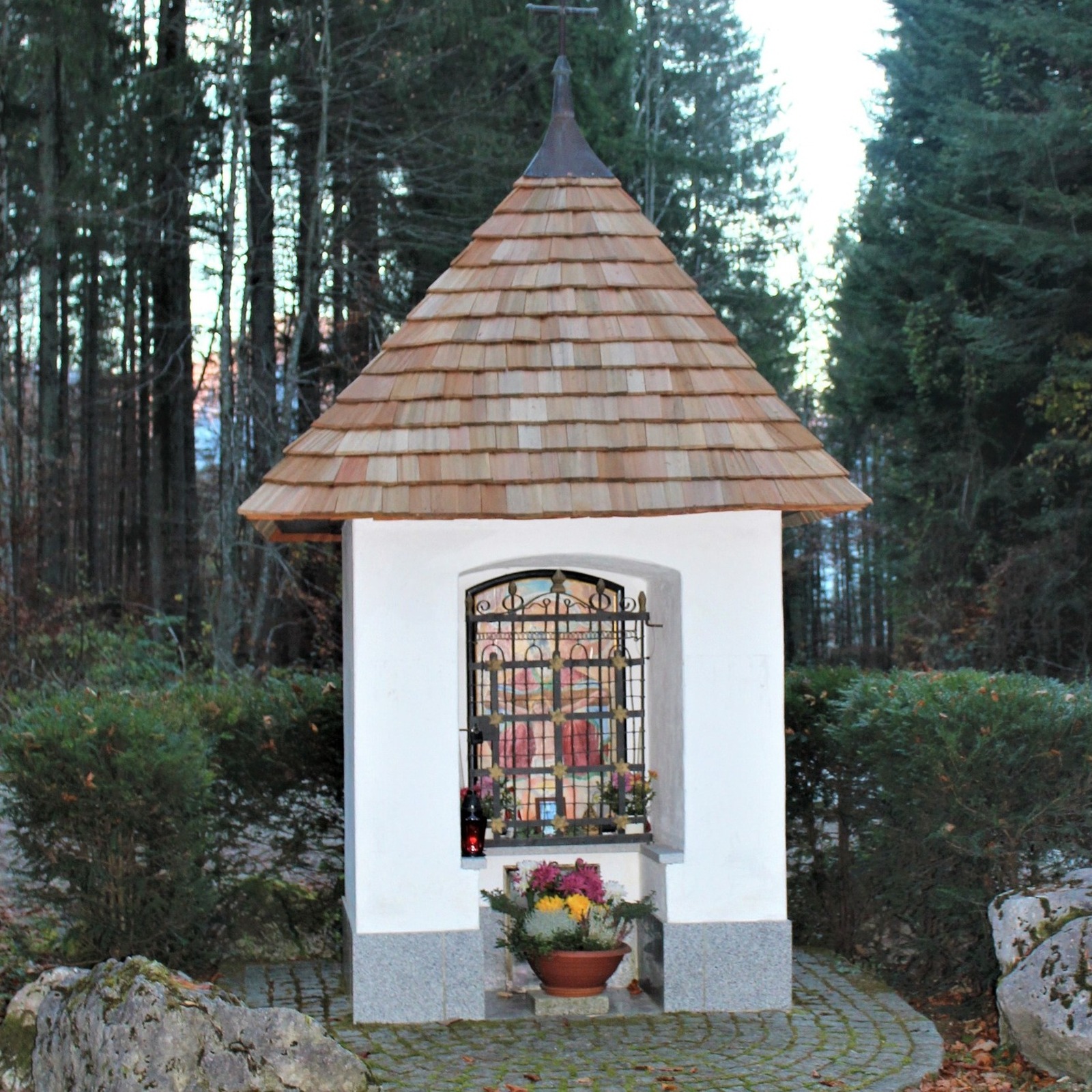
Wayside Shrine Chapel “Trinity Chapel”
On the Engleitstrasse, at the junction of the “Roman Road” (Römerstrasse) to the ruins of Wildenstein Castle
On the Engleitstrasse, at the junction of the “Roman Road” (Römerstrasse) to the ruins of Wildenstein Castle
The road, since the 19th century called “Roman Road” but formerly also called "Iron Road", is actually the old road connecting Styria and Salzburg. Until the late 18th century, it was an important traffic route with a toll booth at Wildenstein Castle.
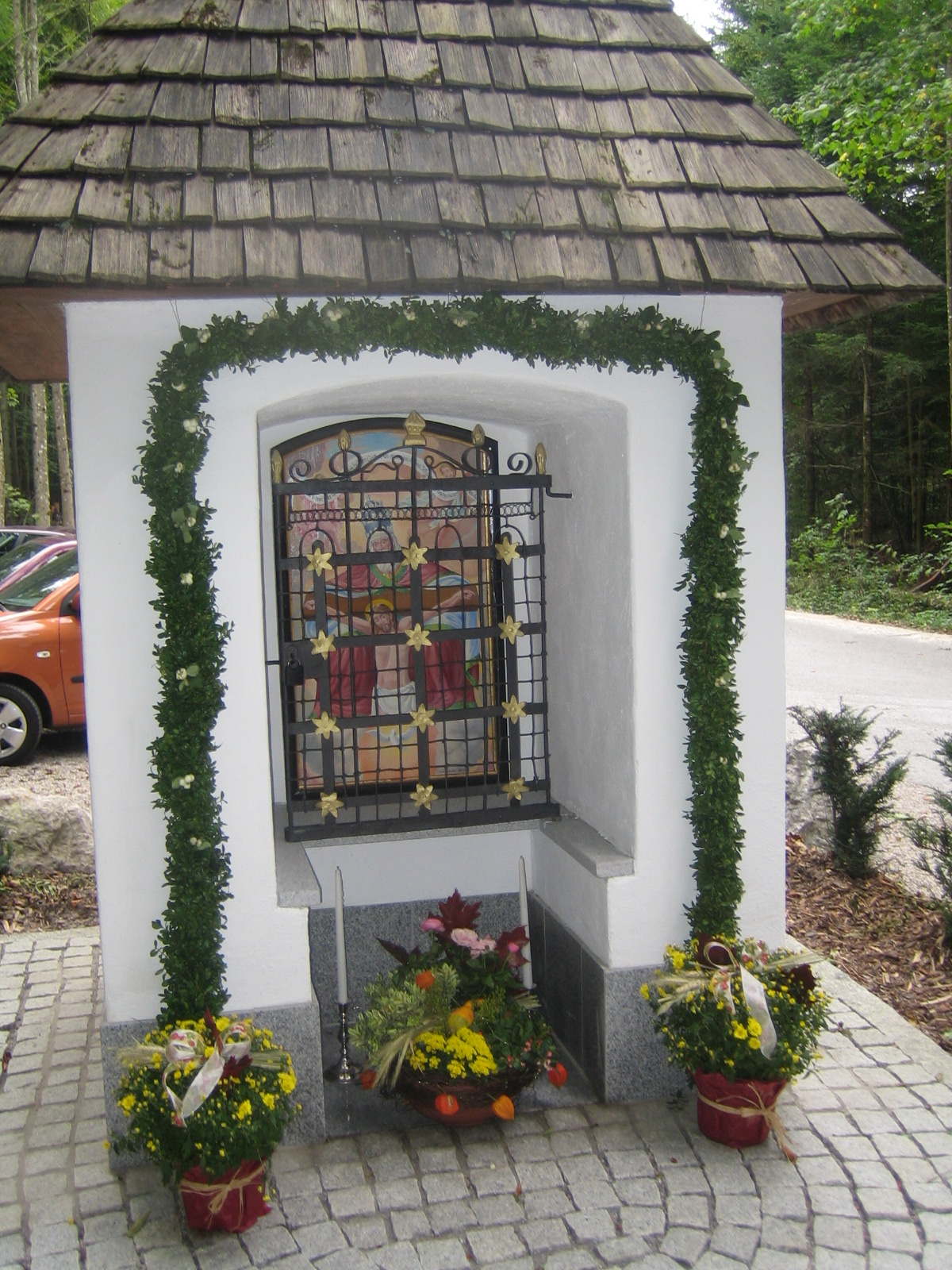
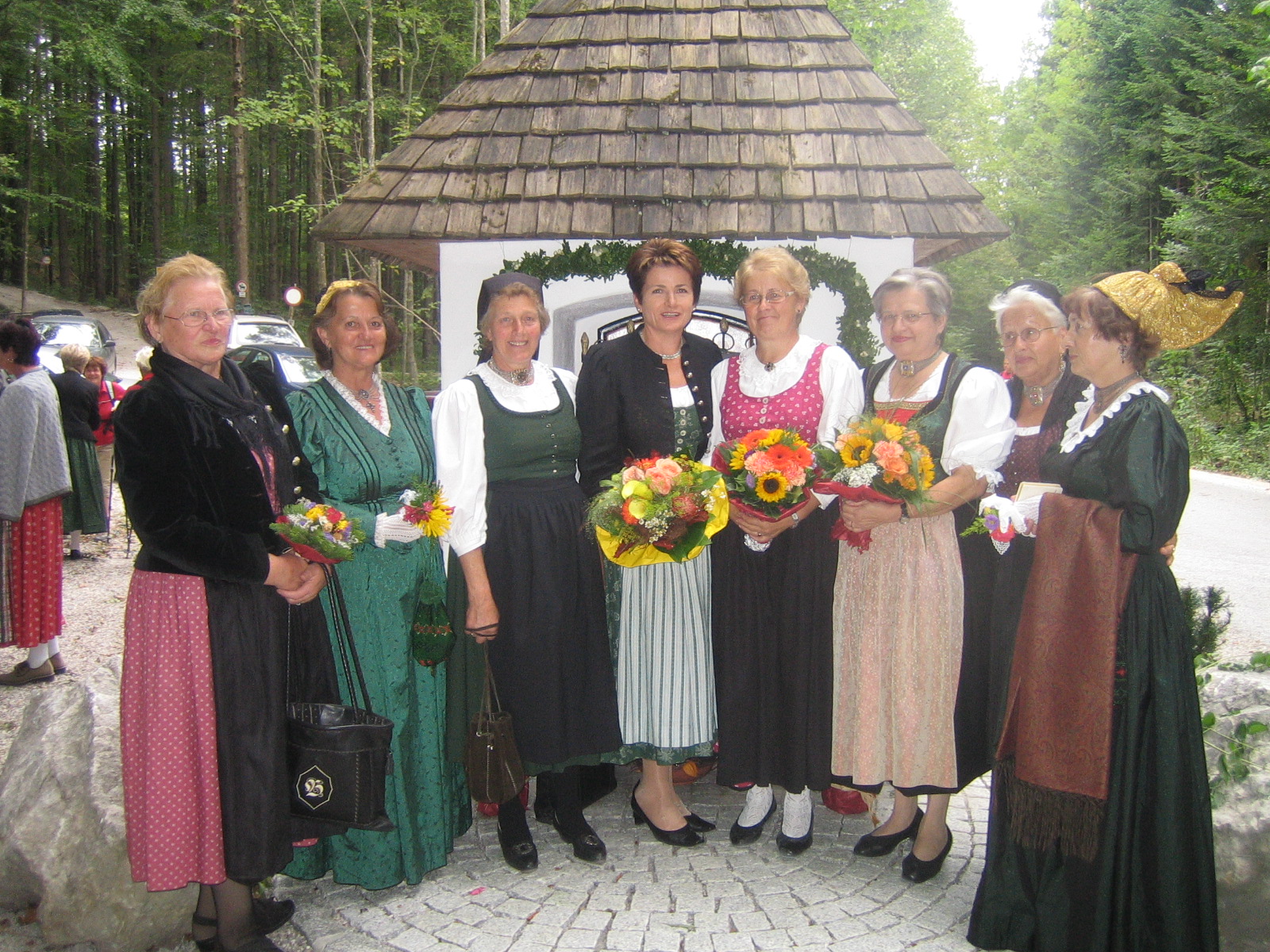
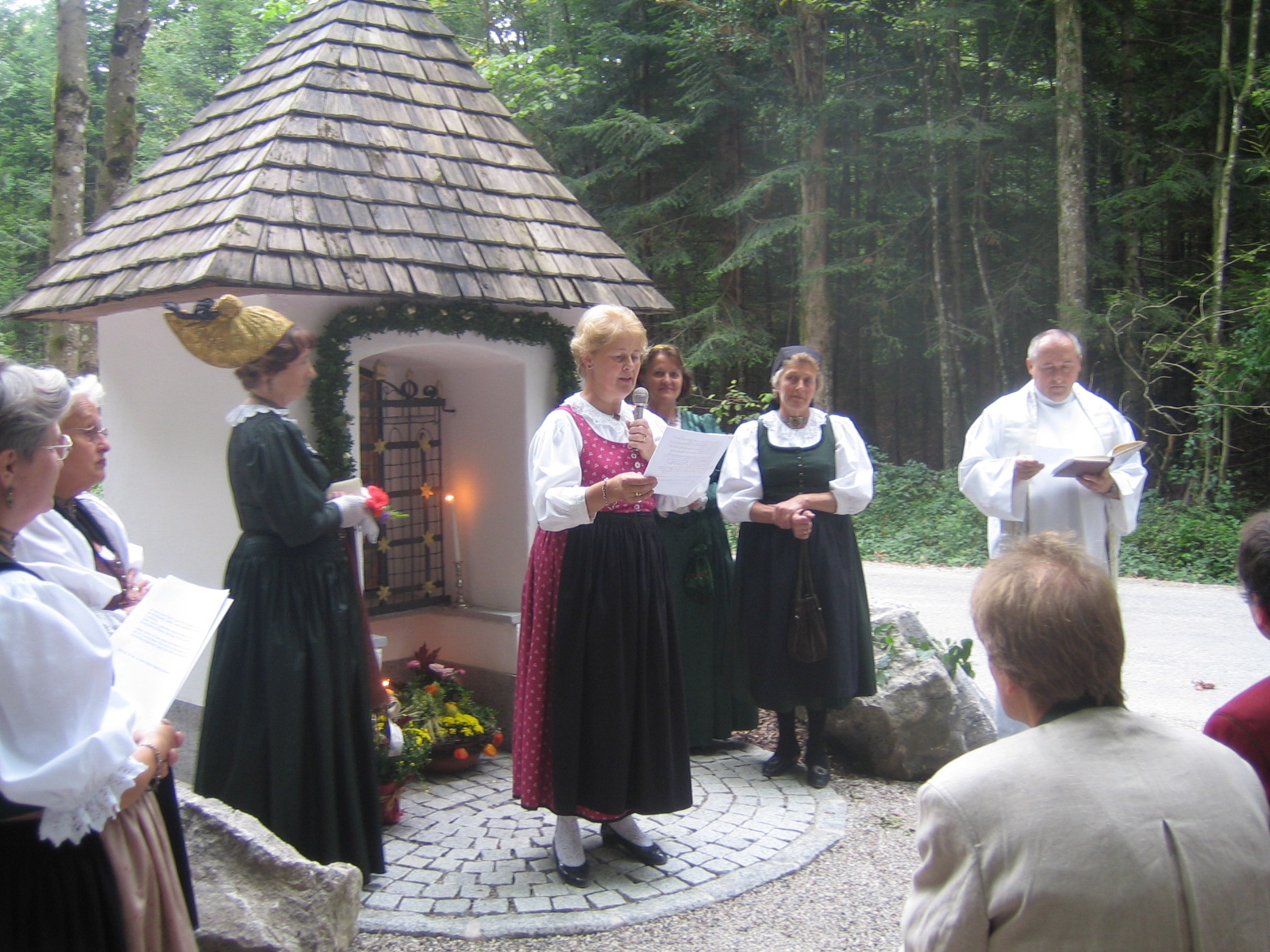
Whether the “Trinity Chapel” owes its origin to the Holy Trinity pilgrimage to Lauffen, which was particularly popular in the turbulent 17th century, cannot be determined at present. The Holy Trinity was invoked against disasters of all kinds, but especially against the plague and similar epidemics. The first traces of the chapel are from the Biedermeier period, when the chapel was extensively renovated between 1844 and 1872 and decorated with murals. In 2006, the chapel was rebuilt in its original form, with the reused roof rotated by 90 degrees. The ceremonial consecration took place on 15 September 2006 and was financed by local traditional society “Goldhauben-, Kopftuch- und Schwammerlhutgruppe” society (traditional female head dresses).
The chapel is a small, old-looking walk-in wayside shrine with arched niche and shingle tent roof. In the niche, there is a “Mercy Seat” panel painting (God the Father, crucified Jesus, dove of the Holy Spirit) with angel and banner (19th century, copy from 1989). In front of the picture is a thin iron grille with wire, sheet metal and wood appliqués.